Hello! This website is part of the Mexican Village Historic Preservation Project which was initiated by the Catholic Diocese of Dodge City. If you would like to submit photos or share a story or two, please contact Dave Myers at (620) 227-1519.
New photos from the collection of Micky (Rodriguez) and Lonnie Judd. Click here, then scroll down.
Nellie Esquibel video interview online
An interview with Nellie Trujillo
Louis Sanchez video interview online
Locals recall oft forgotten battle for civil rights
The Mexican Village
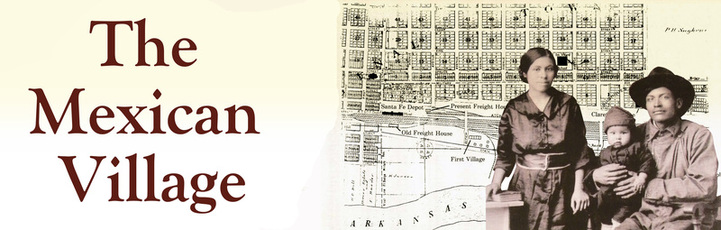
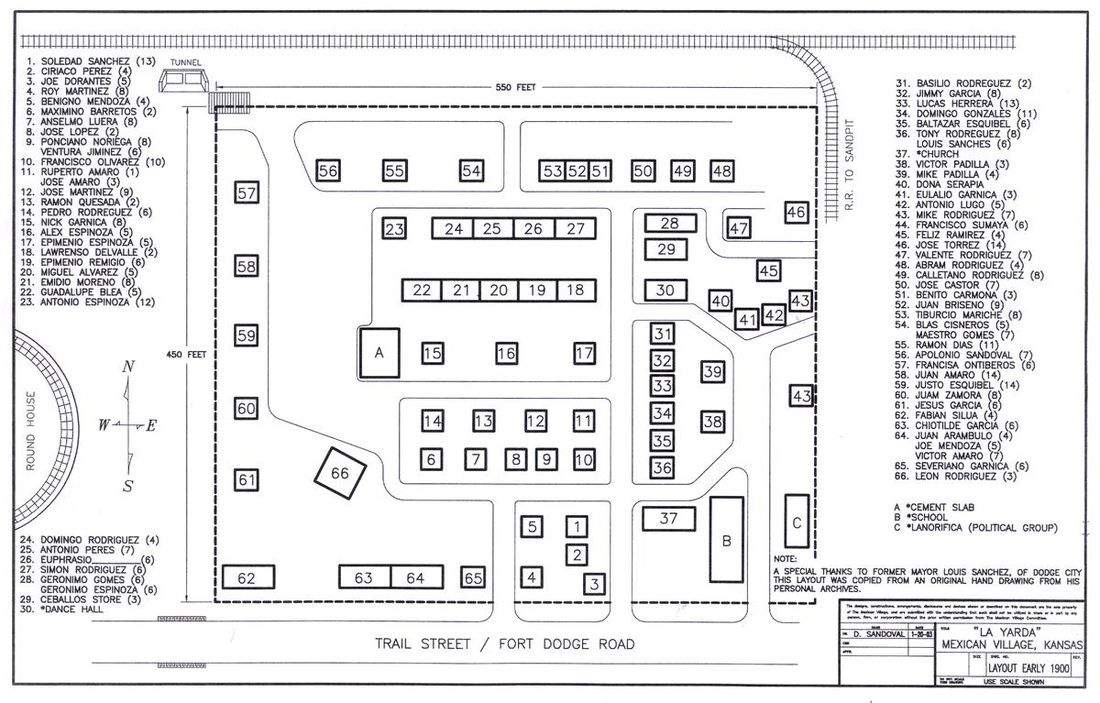
What became known as the "Mexican Village" was formed around 1910. It was located south of the railroad tracks on the eastern half of Dodge City, and housed Mexican immigrants and Mexican Americans who worked for the Santa Fe Railway, and their families. The village had its own grocery store and a Catholic church that doubled as a school. The area was “condemned” in 1955, and many of the houses and families were moved north of the railroad tracks.
The site is presented in cooperation with the Catholic Diocese of Dodge City as part of the Mexican Village Historic Preservation Project.
What became known as the "Mexican Village" was formed around 1910. It was located south of the railroad tracks on the eastern half of Dodge City, and housed Mexican immigrants and Mexican Americans who worked for the Santa Fe Railway, and their families. The village had its own grocery store and a Catholic church that doubled as a school. The area was “condemned” in 1955, and many of the houses and families were moved north of the railroad tracks.
The site is presented in cooperation with the Catholic Diocese of Dodge City as part of the Mexican Village Historic Preservation Project.
Torrez Sisters sing at the Mexican Village reunion
Mexican Village
video project
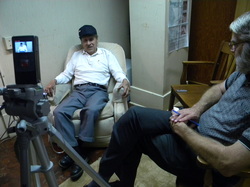
Historian Tim Wenzl, archivist for the Catholic Diocese of Dodge City, visits with Louis Sanchez, a former resident of the village who later became Mayor of Dodge City. The video-taped interview is part of a Mexican Village historic preservation project in which Wenzl and Register editor David Myers will interview former residents telling their stories of life in the village.
Part I and II of the interview with Mr. Sanchez is available and accessible through this site. Others will be placed on line as they are completed. Each video will be put on file in the diocesan archives. You will also be able to see stories from the interviews in the Southwest Kansas Register newspaper.
From Andrea Burgos
Thank you so much for providing this wonderful video. It will be cherished and preserved for many years to come. This video came at the perfect time. We have so many pictures; however, hearing Grandma's voice again and seeing her so proud of her history was REALLY neat and just what we all needed. She was an amazing woman. She is greatly missed.
From Theresa Trujillo:
I'm the youngest of Nellie Torrez Trujillo. My mother is very proud of growing up in the village ... and that makes me proud.
From
Coleen Stein:
Great website! Lots of people will enjoy visiting the pages.
Imagine...
"Can you imagine living in a tent in the middle of winter and having to walk two blocks to get a drink? … They really sacrificed, and that’s why we are here today: to remember their lives, their sacrifice, so that we could have a better life."
-- Louis Sanchez, past Mayor of Dodge City, and former resident of the Mexican Village
Breaking barriers
"One day me and my friend went to a new burger place in town. [Many restaurants did not serve African Americans or "Mexicans" back then.] "My friend, who was black, decided to see what would happen. So he walked up to the window and asked, ‘Do you serve [African Americans] and Mexicans?’ The man answered, ‘No, we serve hamburgers and hotdogs.’
"That broke the ice."
-- Carol Torrez
A village; a family
“On the wedding day ... the bride and groom and wedding party would meet at the bride’s home, and in procession, walk to the church accompanied by the village musicians, walking and keeping pace with the sound of the beautiful Mexican melody into the church.”
-- Fred Rodriguez
-- Louis Sanchez, past Mayor of Dodge City, and former resident of the Mexican Village
Breaking barriers
"One day me and my friend went to a new burger place in town. [Many restaurants did not serve African Americans or "Mexicans" back then.] "My friend, who was black, decided to see what would happen. So he walked up to the window and asked, ‘Do you serve [African Americans] and Mexicans?’ The man answered, ‘No, we serve hamburgers and hotdogs.’
"That broke the ice."
-- Carol Torrez
A village; a family
“On the wedding day ... the bride and groom and wedding party would meet at the bride’s home, and in procession, walk to the church accompanied by the village musicians, walking and keeping pace with the sound of the beautiful Mexican melody into the church.”
-- Fred Rodriguez